The History and Inner Workings of the 1933 Edinburgh City Police Box System

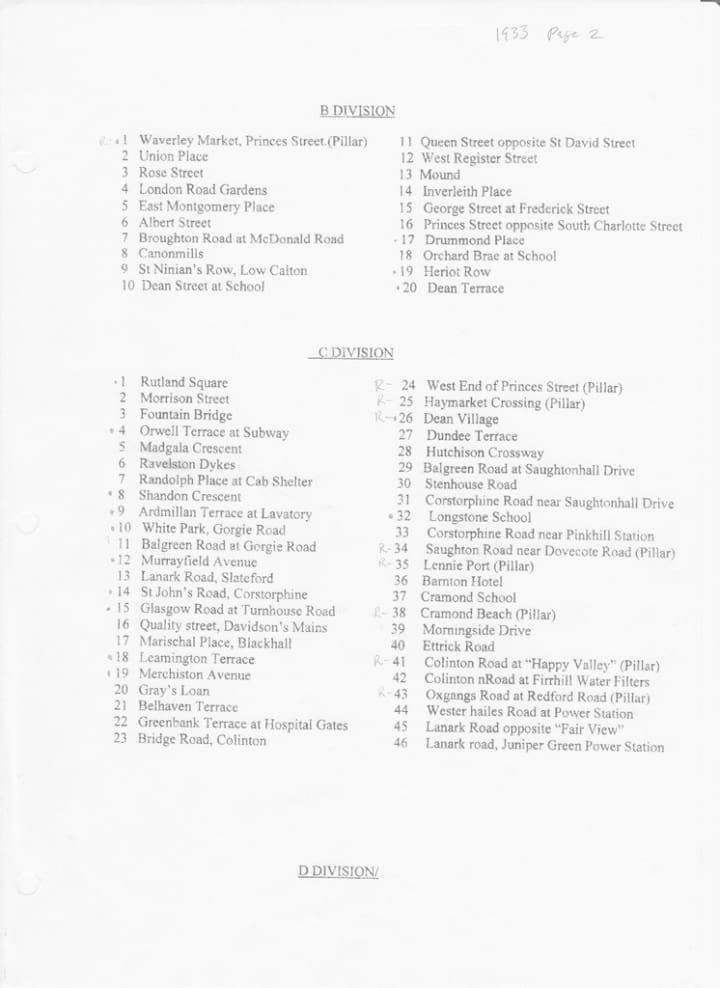
The introduction of the Beat Box System of Policing to the Edinburgh City Police in 1933 revolutionized how law enforcement monitored the streets of the capital. This municipal network stationed specialized cast-iron boxes across strategic neighborhoods to function as miniature local police stations. Prominent historical locations included Box 1A at the Lawnmarket, Box 2A at Hunter Square and High Street, Box 3A at Cranston Street, and Box 6A at the Grassmarket East End, establishing a permanent law enforcement presence directly on the pavement.
A look inside a typical Edinburgh police box reveals a tightly organized, self-contained workspace designed for officers working demanding patrol schedules. The interior setup and equipment included:
A filing cabinet mounted directly above the wooden desk containing critical documentation, including General Orders, Weekly Records, Informations, the Key-holders Book, and official Police Gazettes.
The official Beat Journal sitting permanently on the desk, requiring the patrolling officer to log a precise entry every single time they left the structure to walk their route.
Basic electrical infrastructure, featuring a dedicated socket for a kettle to allow officers to prepare hot drinks during breaks.
The operational mechanics of the system relied heavily on a specialized patrol strategy known as turns. A dedicated list posted to the left of the internal desk outlined the various patrol routes, which were divided into Half Hourly Turns as well as First, Second, and Third Hourly Turns. Each designated turn contained a specific sequence of streets that the officer had to check. To prevent local criminals from monitoring and predicting their movements, officers deliberately worked these turns in random orders or completely reversed the routes.
Supervision within the network was strict and highly structured. Section Sergeants and Shift Inspectors would routinely travel to specific boxes to verify which turn the patrolling officer was executing. Depending on the time recorded in the box log, the supervisors would either follow the officer’s exact path or patrol the route in reverse until they successfully located the constable on the street. Supervisors then examined the officer’s pocket book to ensure all incident reports and official summonses were submitted in a timely manner. While the introduction of personal police radios in the 1960s made the physical turns obsolete, this traditional system remained an active component of Edinburgh policing until the late 1970s.