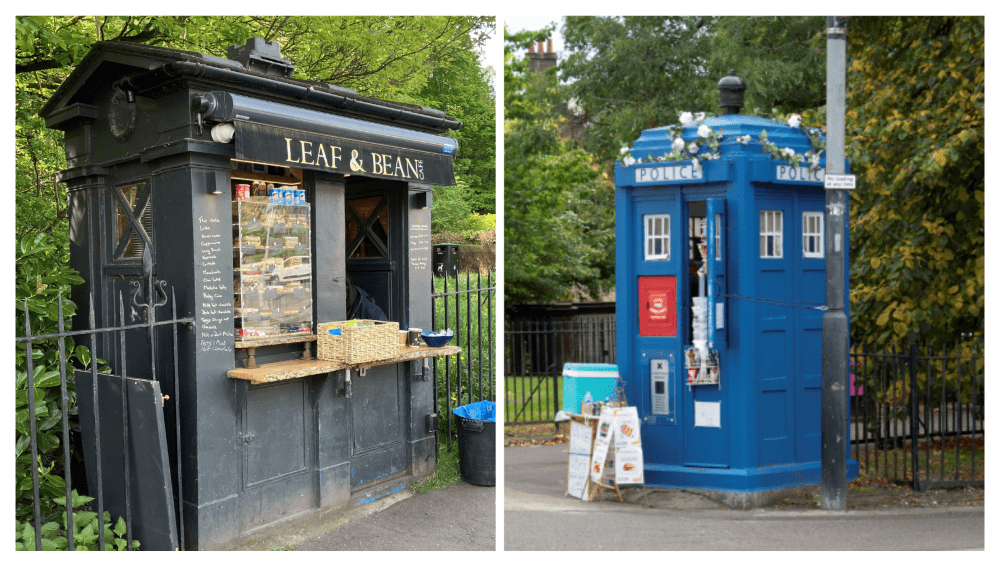
Preserving Scotland’s Cast Iron Heritage Through Creative Reuse

The preservation of Scotland’s historic street architecture relies increasingly on adaptive reuse, a practice that breathes new life into redundant infrastructure. Historic Environment Scotland highlights the sustainable advantages of repurposing these structures, noting that the greenest building is often the one that already exists. Rather than allowing historic cast-iron police boxes to face decay or removal, converting them into active commercial or civic spaces preserves cultural heritage while supporting modern local economies.
The network of police boxes across Scottish cities, particularly the iconic cast-iron models designed by Edinburgh City Architect Ebenezer James MacRae in 1929, represents a significant chapter in twentieth-century civic planning. These boxes were built to last, manufactured from durable materials by local foundries such as the Carron Iron Works in Falkirk. Because of their robust construction and architectural value, many of these kiosks have been granted listed status, recognizing them as protected pieces of national heritage that contribute to the distinct character of the streetscape.
Repurposing these listed micro-spaces requires a careful balance between historical preservation and functional modification. Creative reuse projects across Scotland have shown that these structures can accommodate a wide variety of small-scale uses without losing their external architectural integrity. Common successful transformations include:
Independent food and drink kiosks, such as specialty espresso bars and micro-bakery outlets.
Small-scale retail points, including flower stalls, clothing repair hubs, and book exchanges.
Community and cultural venues, such as miniature contemporary art galleries and local information points.
From a sustainability perspective, retaining and repairing these cast-iron structures prevents the carbon expenditure associated with manufacturing and installing new street furniture. It also keeps valuable historical materials out of the waste stream. By maintaining the outer shells and updating the interiors for modern commercial compliance, communities preserve a tangible link to past municipal history.
The ongoing reuse of police boxes serves as a model for how historic preservation can adapt to contemporary urban needs. When independent traders and community groups take over these redundant kiosks, they prevent urban blight and ensure that these architectural landmarks remain a useful, self-sustaining part of daily life on Scotland’s streets.